
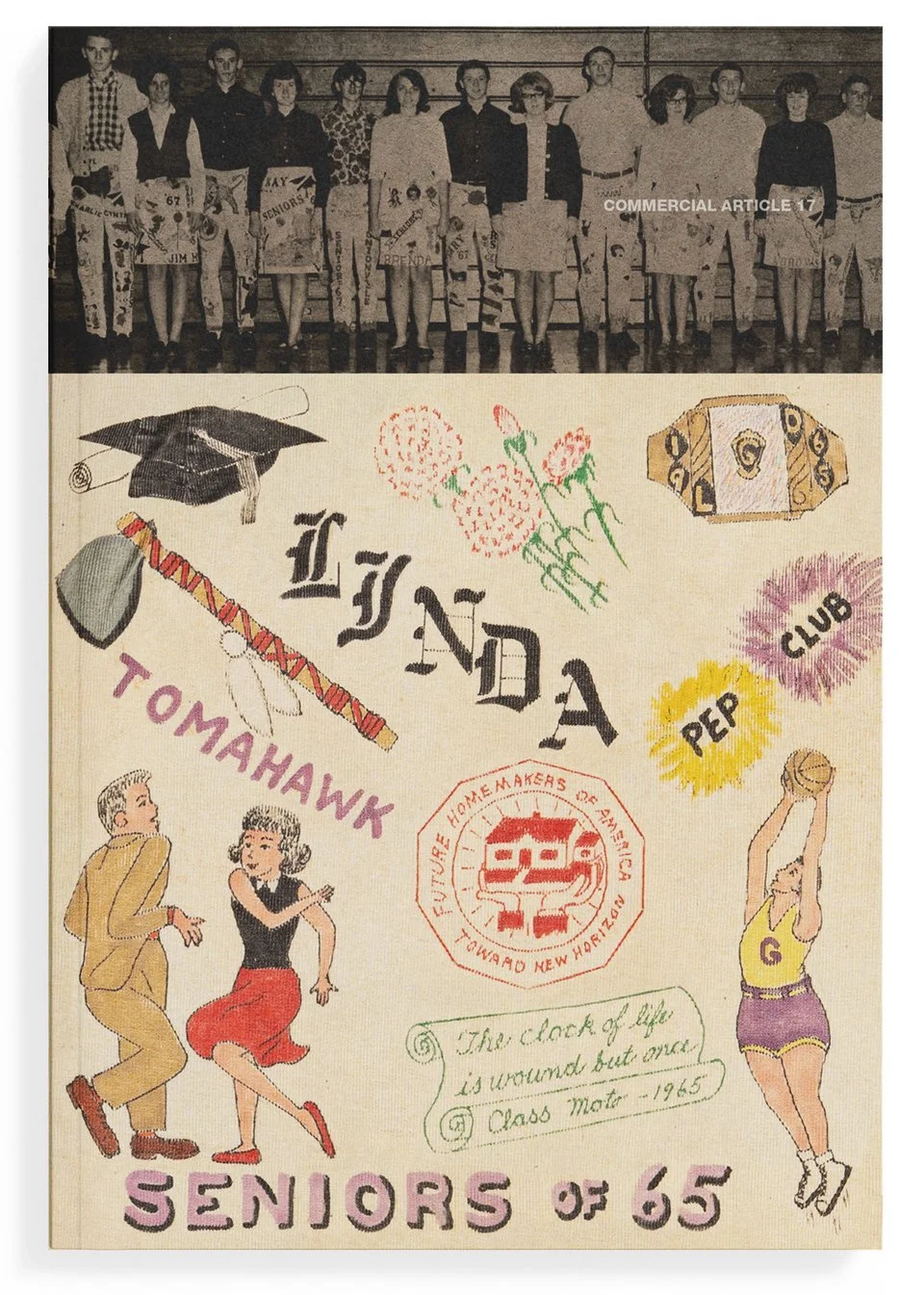
Written by Kelly Gallett Richardson and Mary Figueroa
For more than a century, Hoosier students have taken part in the wildly expressive school tradition of senior cords — adorning one’s golden corduroy pants and skirts with classmate’s names, drawings, school mascots and whatever else they feel like expressing. As a rite of passage for college and high school students, senior cords are a time-honored tradition unique to Indiana. They are the perfect example of the regional design history that Commercial Article strives to document.
Although their popularity may have peaked in the 1960s, senior cords continue to appear on Indiana students. But they have also been discovered by fashion houses like Bode, and by celebrities like Harry Styles, Kendall Jenner, and Jeff Goldblum.
In this edition, Kelly Gallett Richardson, Director and Curator of The Elizabeth Sage Historic Costume Collection at Indiana University, and Mary Figueroa, Curator of History at the Indiana State Museum and Historic Sites offer their insights as collectors and historians focused on preserving senior cords and helping to tell the stories they chronicle.
At 164 pages, this issue features dozens of senior cord garments as well as the history and culture behind the tradition. Commercial Article 17 is designed and printed in Indiana.
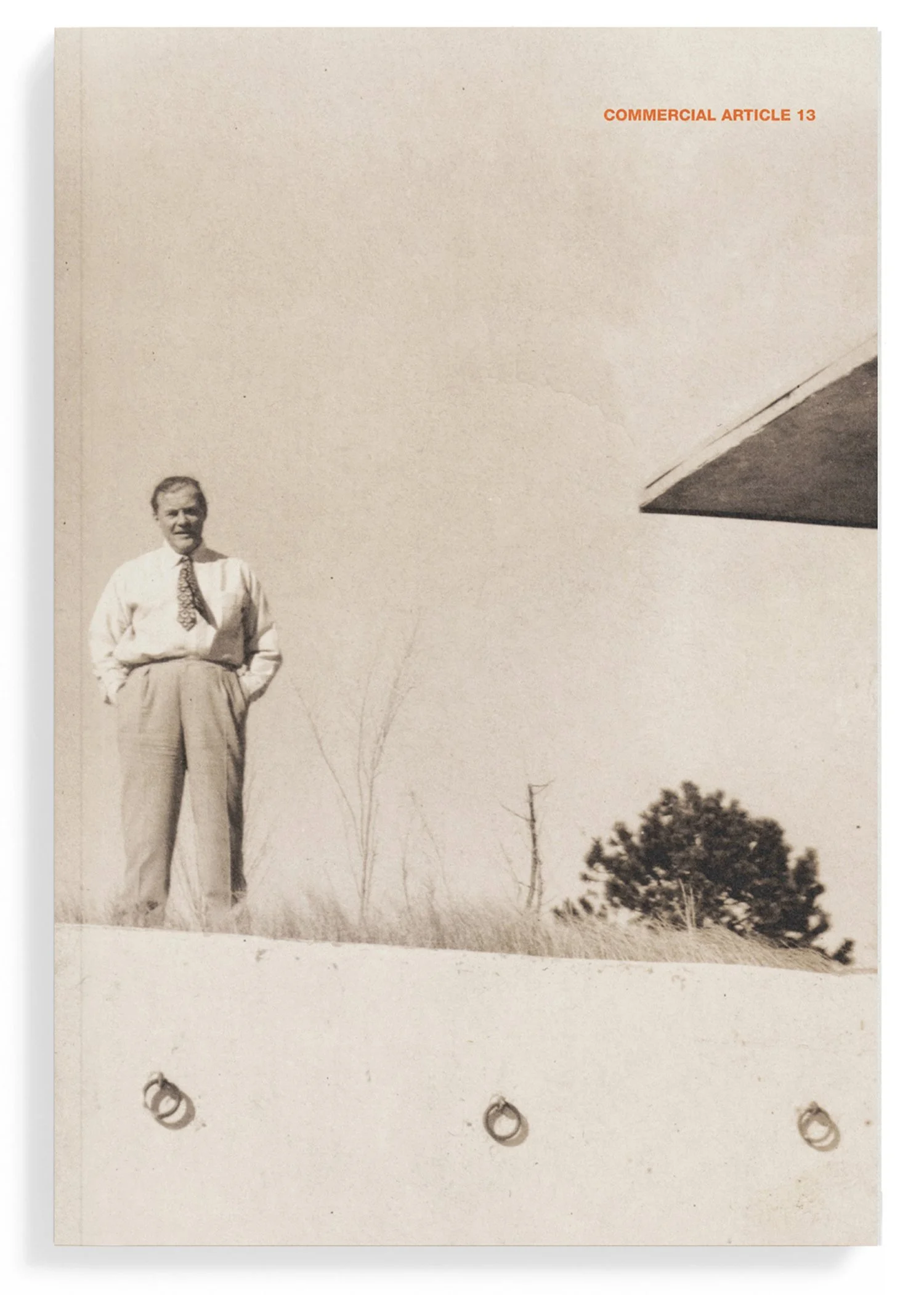
Written by Connie Zeigler
He was an early collaborator (and more) to Philip Johnson, a protégé of Mies van der Rohe, and a furniture designer for Herman Miller and Svenskt Tenn. Despite his many accomplishments most people have never even heard the name Jan Ruhtenberg. His life and work have remained a secret to most, until now.
Jan Ruhtenberg had a knack for being at the right place at the right time. He lived in Berlin and Stockholm in the 1930s just as the International Style was beginning to take hold. And when he came to New York during that same decade, it was to design MoMA’s landmark Machine Art exhibition and to teach Modernist architecture at Columbia University — making him the first European Modernist to do so. His most productive years were as a regional architect in Colorado Springs, until a supposedly scandalous event brought it all to an end.
More than 96 pages, the 13th issue of Commercial Article is illustrated with over 120 images — many from the personal collection of the Ruhtenberg family. Offset printed in Indiana on Mohawk paper.
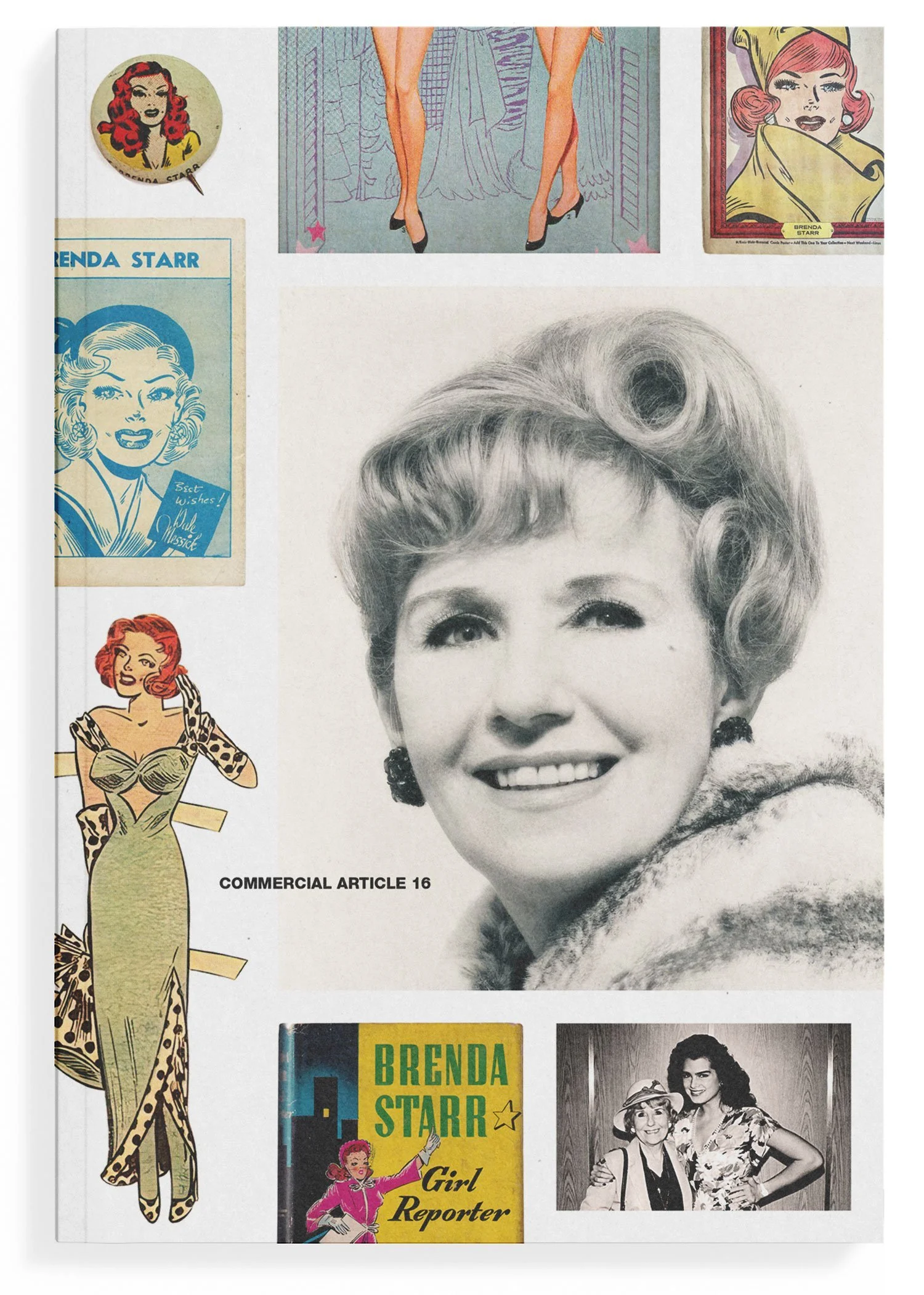
Written by Connie Zeigler
Guest essay by Debbie Millman
For nearly fifty years, Dale Messick wrote and drew Brenda Starr, Reporter, one of the most popular comic strips in the country! As the first syndicated female comic strip creator, Messick was a trailblazer in the male-dominated world of newspaper comics!
Her creation, the intrepid reporter Brenda Starr, began an adventure in 1940 that lasted for decades! Starr’s zany antics and dramatic love affairs took her around the world, to the highest levels of high society, and to the depths of the criminal underworld. Along with her colorful cohorts like Hank O’Hair and Daphne Dimples, Brenda Starr, Reporter delighted millions of readers and was syndicated in over 250 newspapers. She even made the jump from comics to movie serials to television and to a major motion picture!
We are joined this issue by educator, designer, author, and podcast superstar Debbie Millman. Debbie shares her own very personal story of how Brenda Starr, Reporterbecame a lifeline during a troubling period in her young life, and how it helped her solve a mystery nearly fifty years in the making.
This is the biggest issue of Commercial Article yet! At nearly 130 pages, and with over 180 images, this is the one to get! Commercial Article 16 is designed and printed in Indiana.
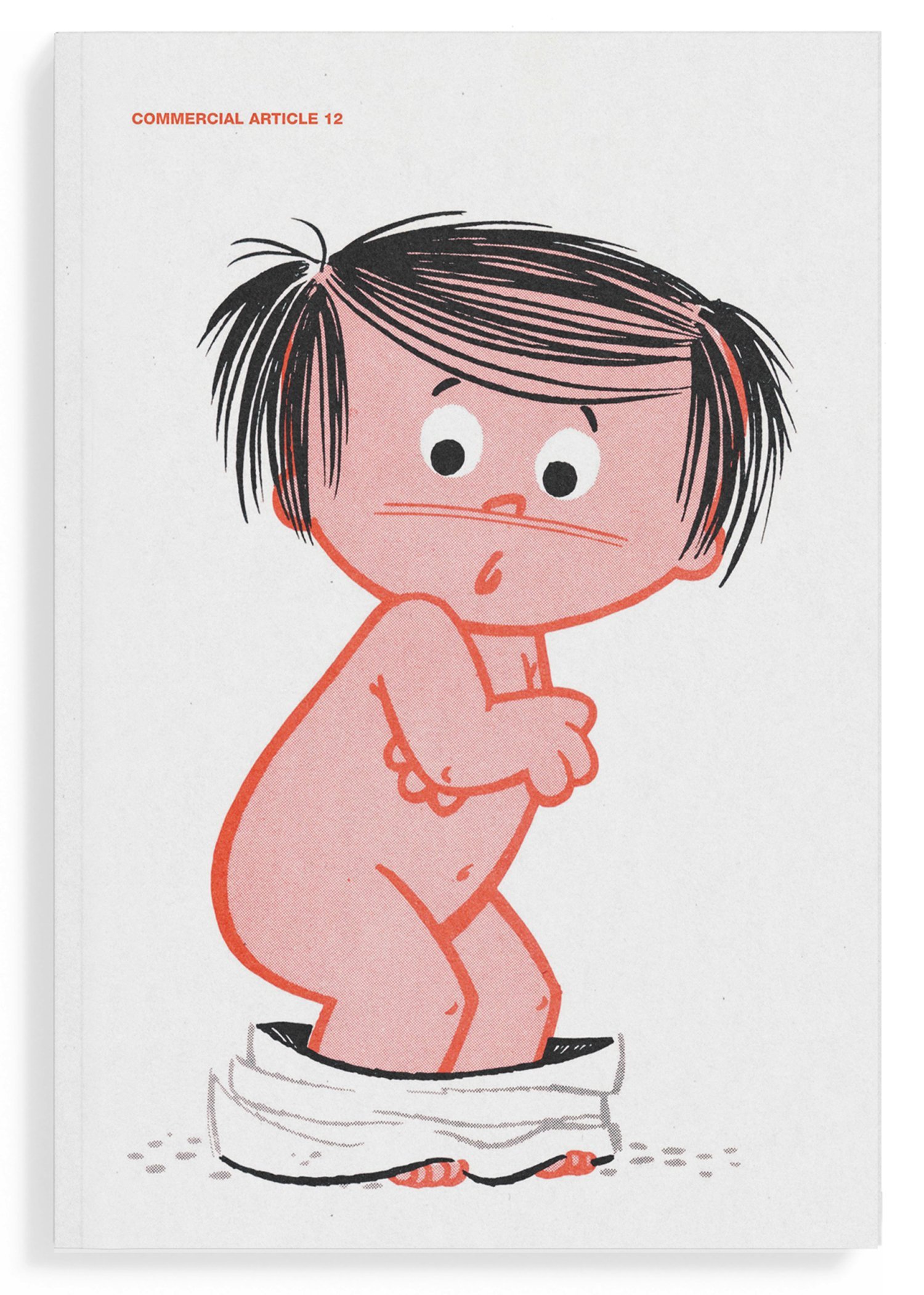
Written by Nicole Sholly
Vowing to make something even more stupid (and sellable) than the Hula Hoop, Dane Love, Dick Miller and Don White used their art school training and Mad magazine-inspired humor to create Stupid, Inc., the world’s first novelty stationery company! Love, Miller, and White would go on to become distinguished giants of Indianapolis advertising.
Stupid, Inc. burned brightly from the late 1950s to the early 1960s. Its wacky product lines grew to include novelty matchbooks and aerosol sprays that sold thousands of units in North America and at high-end stores like Selfridge’s in the United Kingdom. The humor was juvenile but tinged with ennui and melancholic resolution — not your typical gag gifts!
Nearly forgotten, this issue documents a Mad Men-era chapter of Indiana’s design history that remains virtually unknown today. With more than 64 full color pages, it contains dozens of images and product designs that haven’t been seen in decades. Offset printed in Indiana on heavy weight uncoated stock; this is Stupid, Inc.
Written by Connie Zeigler, with Shelley Selim
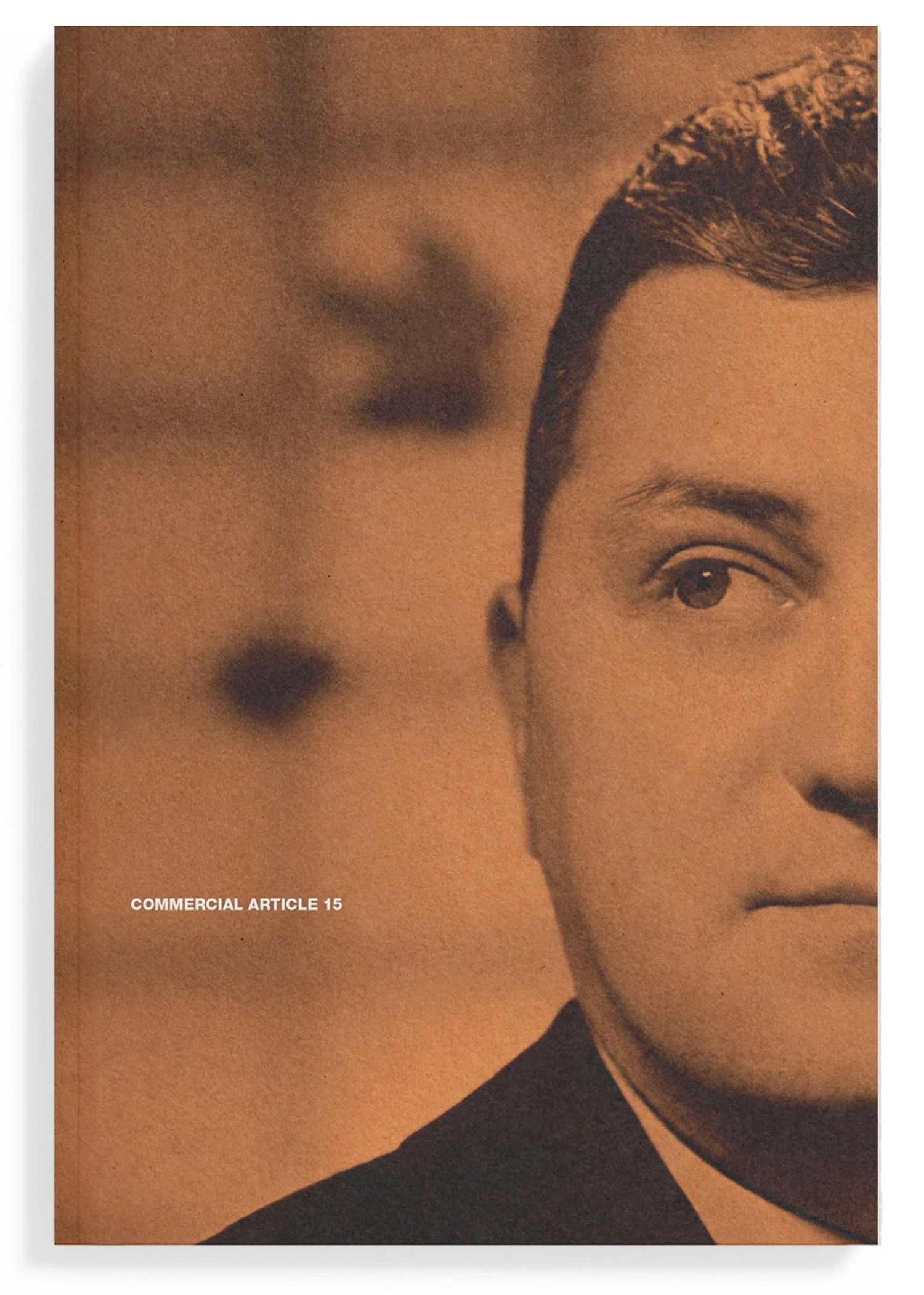
Edward J Wormley was once the most famous mid-century furniture designer in the country, but it's likely you've never heard of him.
As the designer for Berne, Indiana’s Dunbar Furniture Company, Edward Wormley produced an astonishing number of collections that drew on historical references, but were designed for customers with the most modern sensibilities. He believed that one need not erase everything that had come before to create beautiful, forward looking furniture and interiors. Commercial Article 15 presents the story of Edward Wormley’s remarkable career, his myriad achievements, and the love story that defined his life.
In addition, we look at Wormley’s substantial place in MoMA’s landmark Good Design exhibitions of the 1950s, and his friendship with curator (and neighbor) Edgar Kaufmann, Jr.
120 pages, and illustrated with over 140 images! Commercial Article 15 is designed and printed in Indiana.
Written by Connie Zeigler
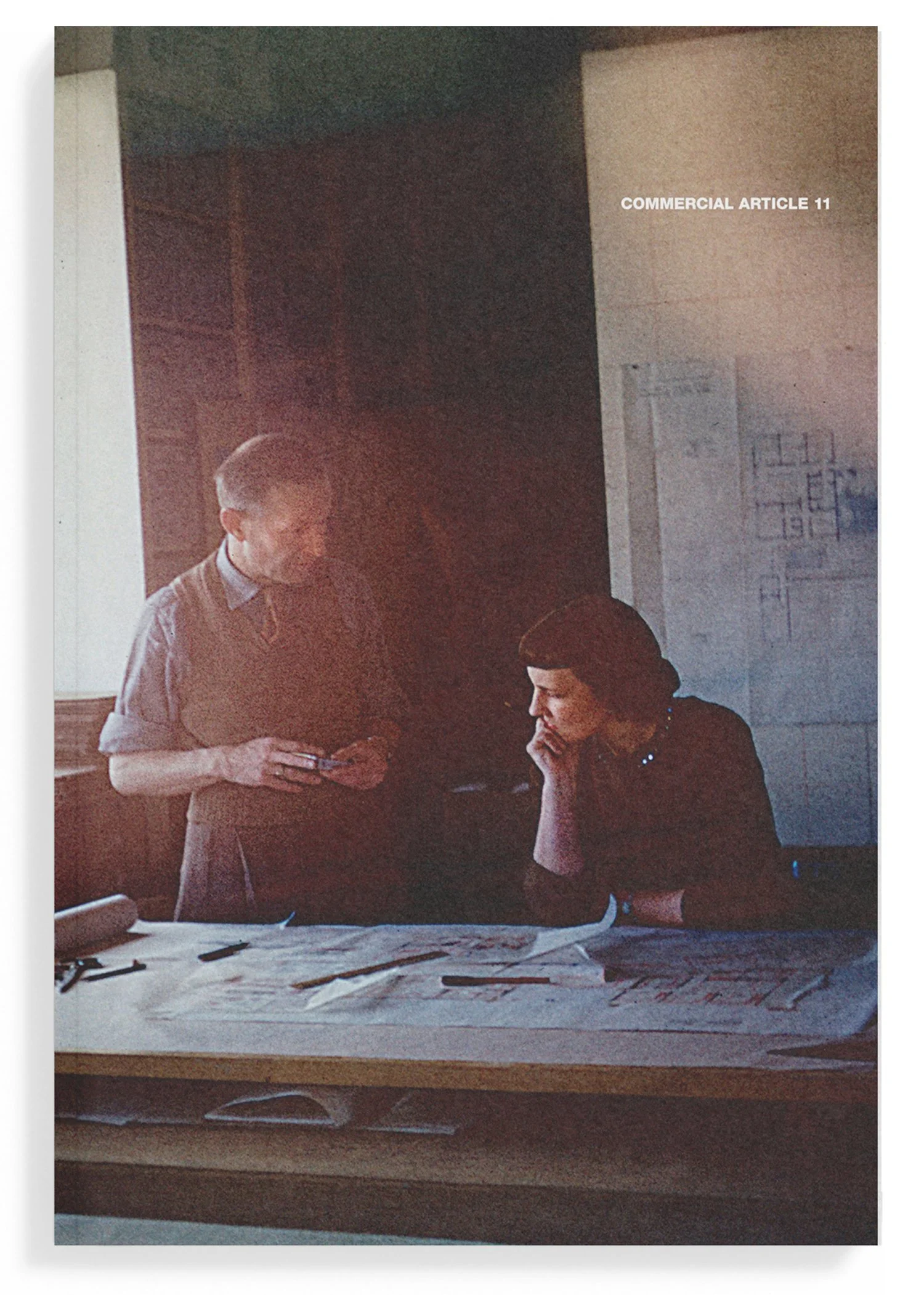
Xenia Miller collaborated with modernist giants Eero Saarinen and Alexander Girard on not one, but two homes — Columbus, Indiana’s Miller House being one of the most important residential projects in architectural history. But that’s just the beginning.
Her contributions to architecture, design, art and historic preservation in central Indiana are largely unknown. Along with her husband, Xenia Miller brought art by international figures like Jean Tinguely, and Henry Moore to small town Indiana. She worked with major architectural figures like Edward Larrabee Barnes (and his wife) to bring inspiring design to schools, churches and other civic buildings. She looked to design’s future, but worked to preserve the past. Hers may be one of the great unsung voices in modernism.
More than 84 pages, this issue is illustrated with dozens of full color photos and drawings — many never before published. Offset printed in Indiana on heavy weight uncoated stock.
Written by Connie Zeigler
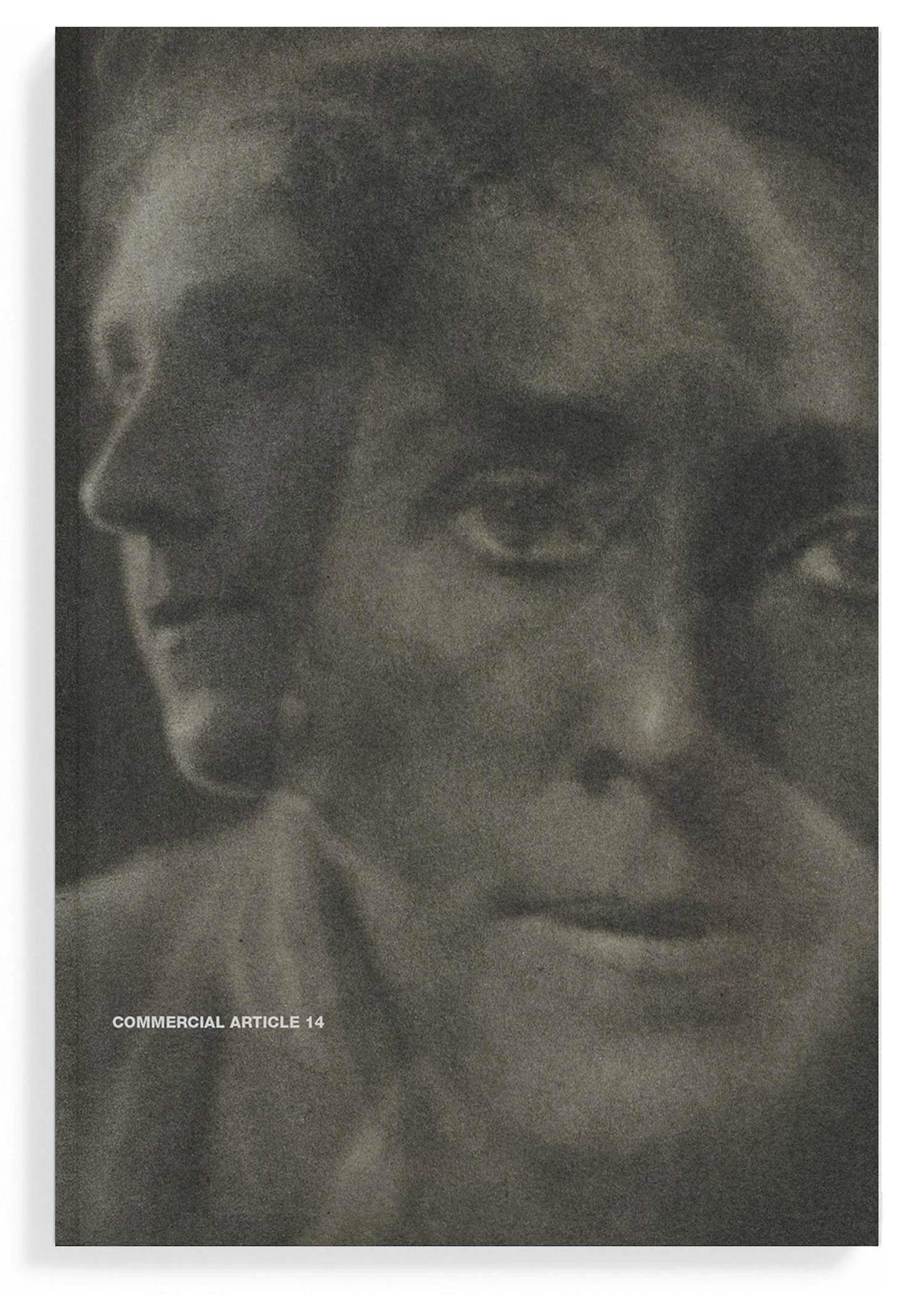
Indianapolis of the late 1800s was an unlikely place for England’s Arts and Crafts movement to have had an impact. But art and design in the midwestern capital city flourished under the influence of William Morris’s guiding hand. It produced talented designers and craftspeople who would become leading figures in the American wave of the movement.
Told through the lives of acclaimed metalsmith Janet Payne Bowles, her publisher husband Joseph Moore Bowles, jack of all arts Brandt Steele, and his illustrator/designer wife Helen McKay Steele, Commercial Article 14 presents the story of how Indianapolis embraced the Arts and Crafts ethos with a passion.
From the landmark publication Modern Art (and it’s legendary designer Bruce Rogers) to the city’s venerable Portfolio Club, this issue tells these stories of creativity and dedication in nearly one hundred pages. With over 170 images “Modern Women, Modern Men, Modern Art: The Arts and Crafts Movement in Indianapolis” is written, designed and printed in Indiana.
With contributions from Fred Bower, Evan Finch, Matt Gonzales, Will Higgins, Ken Honeywell, Mike Knight, Enrique Ramirez, James Sholly, Jon Sholly, Nicole Sholly and Lisa Thomas
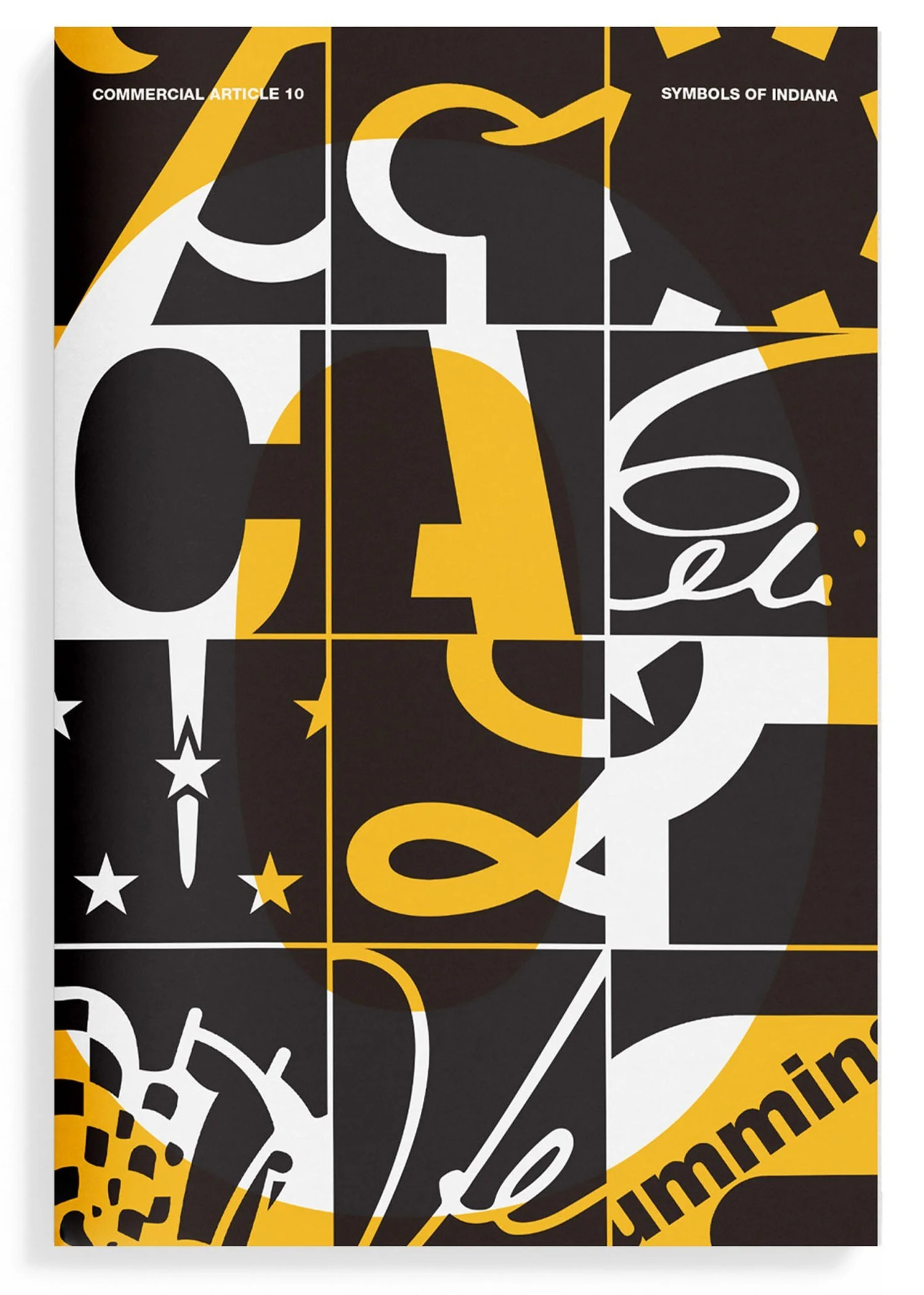
Is the sun rising or setting over the state of Indiana? Which Fortune 500 company’s logo is best described as half-essed? What’s really going on with Burger Chef and Jeff?
In this special tenth issue, we examine Indiana’s graphic identity by researching the histories of its most prominent symbols. Our panel of esteemed writers look at stories behind the logos of Indiana companies like Eli Lilly, the Indianapolis Motor Speedway, Vera Bradley, Cummins, Burger Chef, the Indianapolis Museum of Art, and Ball Corporation. They explore other notable design icons like the Indianapolis and Indiana flags, the Indiana state seal and Robert Indiana’s logo for the city of Columbus.
How do these corporate and civic symbols contribute to the visual and emblematic make-up of the state? We invite you to find out for yourself.
96 pages in full color,
perfect bound with dozens of images.